1. Hire against a scorecard
Before you interview anyone, write down what your best reps have in common. For field roles, that list often includes: they run their own day, they listen more than they talk, and they follow up without being chased.
Score every candidate against the same list. Once a year, check the list against your top performers and update it.
Ask your team: what do our best reps do in their first 90 days that the others don’t?
2. Train the same way, every time
Every new rep should get the same training, built from what your best reps actually do on a visit. Ride along with them. Write down what they check before they walk in, what they ask and how they follow up, and turn that into the program.
When everyone learns the same way, it’s easier to see who needs help, and with what.
Ask your team: could a new rep find an account’s history before their first visit there?
3. Manage like a coach
In Roberge’s model, managers are coaches. Each rep has clear goals, there are regular one-on-ones, and decisions follow what the numbers say.
In field sales, the hard part is knowing what happened on visits you weren’t on. Coaching works when you can read how a rep’s week went and spend the one-on-one on specific accounts.
Ask your team: in your last one-on-one, how much time went to catching up on what happened?
Where Voze fits
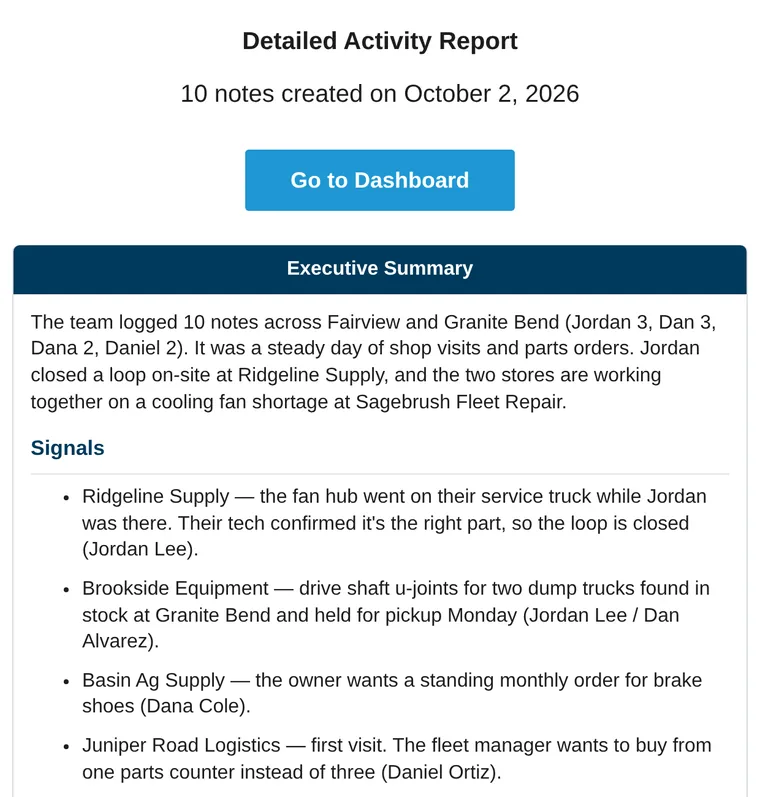
Voze sends managers a daily activity report built from their reps’ visit notes, so a one-on-one can start from what happened that day. Reps see their own notes and follow-ups first. See how Voze works.
4. Keep demand steady for every rep
Work with marketing so each rep has a steady flow of accounts worth visiting, and agree on what makes an account worth the drive.
For many field teams, the best demand is already in the territory: customers who buy less than they could, and accounts that used to buy and stopped.
Ask your team: does each rep know which accounts to call on next week, and why?
Where technology fits
The book’s subtitle names data and technology as the thread through all four parts. The test for any tool is the same: does it make the rep’s day easier? If it doesn’t, reps won’t use it, and the data you wanted never shows up. Chapter 3 covers the tools.
Putting it together
Don’t try to fix all four at once. Pick the part where your team loses the most deals, choose one number to watch, and check it again in 30 days. Then move on to the next. For more, read the Voze blog.
This chapter sums up the book’s four parts in our own words and adapts them for field teams. For the full method, read The Sales Acceleration Formula.